
Rodent Feces Cleanup in Seattle: Safe Steps, PPE, and When to Call a Professional
Updated: Sep 24

TL;DR — Rodent Feces Cleanup in Seattle: Safe Steps, PPE, and When to Call a Professional
I’ll walk you through how to approach rodent feces cleanup in Seattle, what protective gear helps keep you safe, and when it’s time to call a professional biohazard cleanup team.
Key Takeaways:
I do not recommend sweeping or vacuuming rodent droppings before the area has been properly disinfected.
If there are only a few droppings on a hard surface, you may be able to handle them carefully with the right precautions.
If there is heavy contamination, urine, odor, insulation damage, dead rodents, or a vehicle involved, I would take it more seriously.
When we handle rodent cleanup, we inspect the area, remove affected materials, disinfect, address odor, and dispose of waste safely.
If rodents are still active, cleanup should be coordinated with pest control or exclusion so the problem does not continue.
What is the safest way to clean rodent feces in Seattle?

I’m Michael with HazardPros. If you find rodent feces in your home, I want you to take it seriously, but I don’t want you to panic.
The safest first step is to avoid disturbing the droppings. If it’s safe to do so, ventilate the area. Wear gloves, wet the droppings and nearby surfaces with disinfectant, let it soak, then remove the material carefully. Do not sweep or vacuum it. The main goal is simple. Keep contaminated particles out of the air you breathe.
Rodent droppings can seem like a small issue at first, but the real concern depends on the severity of the situation. Where they are matters. The amount matters. So does how long they have been there, how air moves through the space, and whether there is urine, nesting material, or dead rodents nearby.
A few droppings under a sink are very different from heavy contamination in an attic, crawlspace, garage, vacant rental unit, or vehicle.
What PPE is needed for rodent feces cleanup?

The PPE you need for rodent feces cleanup depends on how much contamination there is and what kind of space you are dealing with. For a small, limited cleanup, rubber or plastic gloves may be the basic starting point. When the contamination is heavier, think about protection more seriously.
PPE is not just about putting on a mask. A dusty attic with droppings in the insulation is very different from a hard bathroom floor. A crawlspace with poor ventilation is different from an open kitchen.
If a vacant property has a heavy infestation, we may need coveralls, shoe covers or rubber boots, eye protection, gloves, and the right respiratory protection for the conditions.
What should you do before cleaning rodent droppings?

Before cleaning rodent droppings, stop and assess the size of the problem. Do not start with a broom, shop vacuum, household vacuum, or dry rag.
Look at where the droppings are. Are they on a hard surface, or are they on carpet, insulation, stored boxes, furniture, air ducts, a vehicle, or a crawlspace? Is there urine staining? Is there a strong smell? Are there dead rodents or nesting materials? Are pets, children, pregnant people, older adults, or immune-compromised people in the home?
If contamination is small and on a hard surface, careful cleanup may be possible. If the area is widespread, dusty, porous, or hard to access, it is safer to call a professional.
I would rather see someone ask for help early than make the space more hazardous by disturbing dry waste.
What is the safe process for a small hard-surface cleanup?

For a small cleanup on a hard surface, I want you to keep it slow, controlled, and contained. Start with fresh air, gloves, wet disinfection, careful pickup, safe disposal, another surface cleaning, and proper handwashing.
If the space allows, open doors and windows first, then leave the area while it ventilates. Put on rubber or plastic gloves before you touch anything. Spray the droppings and the surrounding surface until everything is wet. Let the disinfectant sit for the full time listed on the label. That contact time matters.
Use paper towels to pick up the material. Place the towels directly into a covered trash container. Once the material is removed, clean the hard surface again.
When you are finished, wash your gloved hands before removing the gloves. Take the gloves off carefully, throw them away, and wash your hands again with soap and warm water.
Do not reuse disposable gloves. Do not shake out contaminated materials. Do not use compressed air. Keep contaminated waste contained as you move it through the property.
When should you call a professional for rodent feces cleanup?
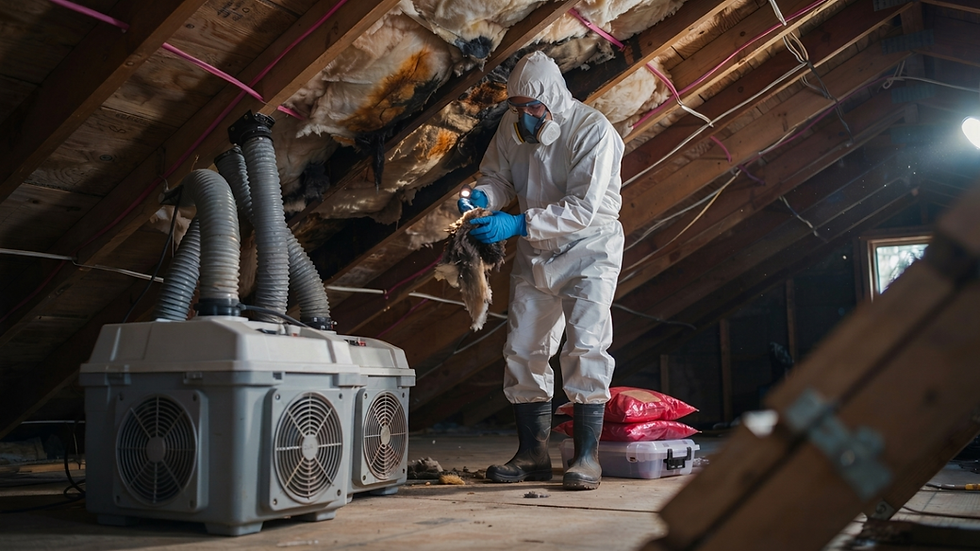
I usually recommend calling a professional for rodent feces cleanup when the contamination is heavy, spread through more than one area, mixed with urine, or causing an odor you cannot get rid of.
You should also get help when droppings are in insulation, soft materials, nesting areas, or near dead rodents. Those situations need more than a quick surface cleaning.
Attics are one of the most common places we see this. Droppings and urine can settle deep into insulation. If that insulation is contaminated, cleaning only what you can see will not fix the odor or reduce the exposure concern. In many cases, we need to assess the insulation itself and remove affected material safely.
Vehicles can be just as sensitive. Rodents often nest near air intakes, cabin filters, wiring, trunks, glove compartments, and under or inside seats. If contaminated material is disturbed near ventilation, it can move into the passenger area.
I would rather have you get clear answers before the problem spreads. Professional help is also wise for crawlspaces, rental units, commercial spaces, and heating or air systems.
What does professional rodent cleanup include?

When we handle rodent cleanup, the goal is not just to make the area look better. It is to make it safer. That means we inspect the space, plan the work carefully, contain affected areas when needed, remove contaminated materials, disinfect surfaces, address odor, and dispose of waste properly.
We start by assessing the areas that were affected. That may include kitchens, garages, attics, crawlspaces, basements, sheds, storage areas, vehicles, and utility rooms.
From there, we look at what can be cleaned and disinfected, and what may need to be removed. Hard surfaces can often be treated, but insulation, cardboard, fabric, and other porous materials may hold contamination in a way that cleaning alone cannot solve.
For larger or more complex jobs, we also follow applicable Washington biohazard cleanup rules so contaminated materials are handled the right way.
If you are dealing with urine odor, disinfectant may not be enough. Odor can stay behind when urine has soaked into insulation, wood, or stored belongings. In those situations, we focus on finding and removing the source, then treating the affected surfaces the right way so the space can be restored properly.
How do you dispose of contaminated cleaning materials?

I treat contaminated cleanup materials carefully because disposal can spread the problem if it is rushed. The goal is simple. Keep affected waste contained so it does not move through your home, building, or shared areas.
For a small household cleanup, things like paper towels or disposable materials may be placed in a covered trash container after proper wet disinfection. For larger situations, we may need professional disposal methods. That can include bulk materials, insulation, dead rodents, PPE, and other affected debris.
Do not leave contaminated bags open. Do not drag them across clean flooring. Do not compress materials in a way that pushes air, dust, or debris back into the space. Safe disposal is part of doing the job right, not something to figure out at the end.
How do you keep rodents from returning after cleanup?

You keep rodents from returning after cleanup by removing food sources, sealing entry points, reducing nesting areas, and coordinating pest control when needed. Cleanup removes contamination, but exclusion helps stop the cycle.
Common attractants include pet food, open pantry items, bird seed, trash, clutter, and gaps around pipes, vents, doors, garages, foundations, and utility lines. In Seattle homes and older buildings, small openings can be enough for rodents to enter.
Summary

I’d like you to approach rodent cleanup carefully. Sweeping, vacuuming, or stirring up dry droppings can increase exposure risk.
If it is a small, limited hard-surface cleanup, you may be able to handle it with the right precautions. If there is heavy contamination, odor, insulation, vehicle contamination, or affected porous materials, it’s safer to bring in trained help.
I built HazardPros to help people handle situations like this calmly and discreetly. We provide thorough rodent biohazard cleanup across Washington, including droppings, urine, odor, dead rodents, and contaminated insulation. If you are unsure what to do next, request a free quote and talk with us about the safest option.


Comments